
Verifying Statistics, Quotes, and Policy Claims in Overseas News With Government and International Organization Sources
Overseas media analysis provides critical context for global events by interpreting dense official documents and incorporating expert reactions. However, no matter how reputable the publication, a news article remains an editorial interpretation. The foundational truth – including exact definitions, methodology, legal boundaries, and data limitations – resides solely within the original government decree, legislative text, or international organization report.
A rigorous verification protocol prevents readers from confusing a journalist’s political interpretation with an institution’s actual legal mandate. The safest analytical approach separates three distinct layers: the text of the official document, the editorial framing of the media, and the objective conclusions the evidence actually supports. Relying purely on a summarized news headline often leads to flawed business strategies and inaccurate policy forecasting.
Source Identification and Document Status Verification
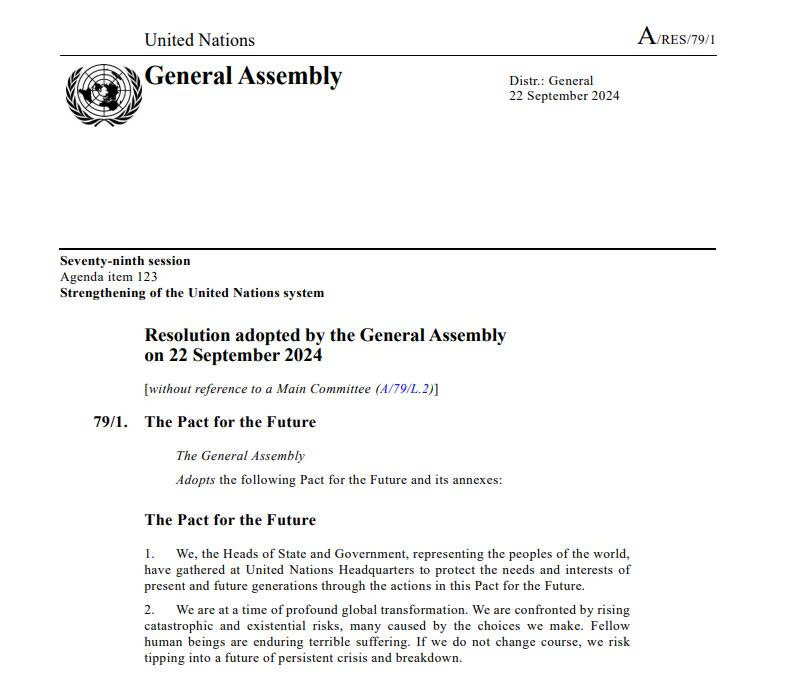
Before evaluating an overseas news claim, researchers must locate and classify the primary source material. A media article citing “the latest UN report” is practically useless without verifying the exact document version, publication date, and dataset the journalist referenced.
Classification of the Issuing Entity and Text Type
Not all official texts carry the same weight, and misidentifying the document type is a common analytical error. Researchers must first classify the material: is it a binding legislative act, an international organization resolution, a statistical data table, or merely a preliminary government press release?
Once classified, the document’s formal status must be verified using its unique document symbol or DOI (Digital Object Identifier). Tracking these document numbers reveals whether the media article is analyzing an early draft, a finalized accepted version, or a recently amended revision. For United Nations materials, unique alphanumeric document symbols remain consistent across all official language translations, making them the most reliable search parameter for locating the original text.
Cross-Referencing Dynamic Economic Databases
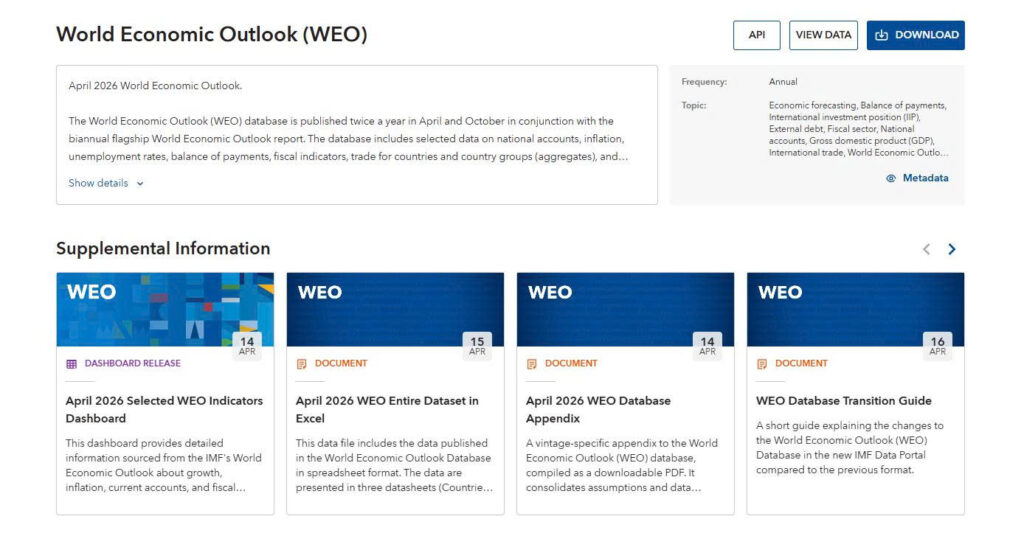
When articles analyze dynamic economic data – such as IMF global forecasts or World Bank poverty indices – researchers must identify the specific database release date. The IMF publishes its World Economic Outlook twice a year, meaning two articles discussing the “same forecast” might actually rely on completely different publication rounds.
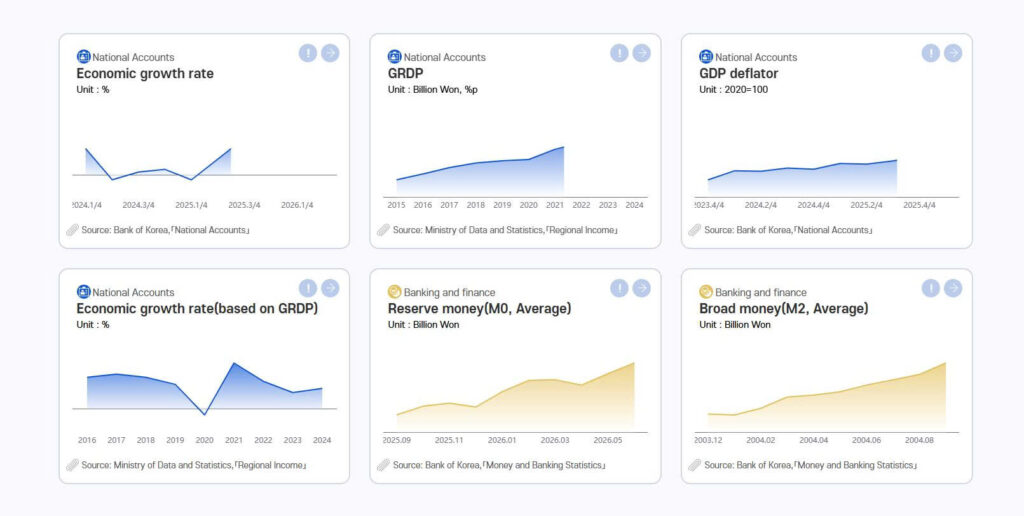
When analyzing international data concerning South Korea, researchers should cross-reference findings with official domestic platforms to understand contextual differences. KOSIS provides comprehensive national statistics, while the Bank of Korea’s ECOS system tracks external transactions, money, finance, and national accounts. Because domestic and international bodies may use different fiscal calendars, currency baselines, or demographic definitions, the goal is not to force the numbers to match perfectly. Instead, the objective is to understand the methodological differences behind the statistical variance.
Direct Evidence Mapping and Claim Reconstruction
Rather than reading a 500-page official report from beginning to end, an efficient researcher should isolate the specific claim in the news article and reverse-engineer its origin.
Paragraph-Level Fact Matching for Statistical Claims
Every statistic, percentage, and quotation presented by the overseas media must be manually connected to a specific table, legal provision, or paragraph in the original text. If a journalist states that “economic growth declined severely,” researchers must locate the exact table to verify whether the metric refers to quarter-on-quarter growth, year-on-year real growth, per-capita growth, or merely a revised projection.
Any causal relationships, political predictions, or perspectives presented in the news article that do not appear in the original document must be explicitly separated and labeled as the reporter’s editorial interpretation.
Translation Nuances and Legal Terminology Strength
Translating official policy documents introduces severe risks of altering the original legal intent. A poorly translated news article can accidentally escalate a mild diplomatic suggestion into a binding legal mandate, creating false alarms for international businesses.
Policy Meaning of Contractual and Legal Terms
Terms possessing vastly different legal strengths must be checked against the original language text to ensure they are not lumped into the same generic expression in the translation.
| Original English Legal Term | Diplomatic/Legal Strength | Misleading Translation Risk |
| Shall / Must | Binding legal obligation | Translated as a soft suggestion (Nên/Có thể) |
| Should / Recommends | Non-binding guidance | Translated as a strict mandate (Phải/Bắt buộc) |
| Sanctions | Punitive economic/legal measures | Confused with general trade tariffs or restrictions |
| Draft / Preliminary | Unapproved, subject to change | Presented as finalized law or official policy |
If the issuing agency provides an official glossary or if a verified official translation exists, it must serve as the absolute reference point. When summarizing findings in another language, researchers should retain the original English or French legal term in parentheses to prevent downstream misinterpretation.
Media Perspective and Expertise Assessment
Official documents are not immune to institutional bias; they reflect the political mandate, data access limits, and assumptions of the issuing body. Consequently, media analysis is necessary to reveal alternative viewpoints and criticisms. However, the quality of that analysis depends entirely on the publication’s expertise.
Evaluation of Reporter Background and Article Type
Researchers must verify the reporter’s specific field of responsibility and local coverage experience. A financial analysis written by a seasoned regional economics correspondent carries more weight than a general summary compiled by a desk editor.
Furthermore, the article type must be clearly identified: is it a neutral news dispatch, a subjective editorial, or an expert analysis piece? When comparing multiple news outlets discussing the same international resolution, researchers must distinguish whether a publication conducted an independent reading of the primary text or simply reprinted a wire service quotation without verification.
Follow-Up Data Updates and Revision Tracking
Policy announcements and statistical releases are rarely final. Government ministries frequently issue subsequent clarifications that drastically alter the initial interpretation of a law or economic report.
Post-Announcement Implementation Guidance
Researchers must actively track whether the issuing agency releases follow-up Q&A documents, implementation guidelines, or revised statistical errata after the initial announcement. A media article written on the day of a press release may become entirely obsolete a week later when the official implementation guidelines are published.
When documenting overseas policy changes, researchers should explicitly record the confirmation date in their notes. Writing conclusions as absolute, permanent facts is dangerous when the underlying implementation guidance remains subject to future revisions. Labeling a claim as a “current projection based on available data” is always safer than presenting it as an unchangeable truth.